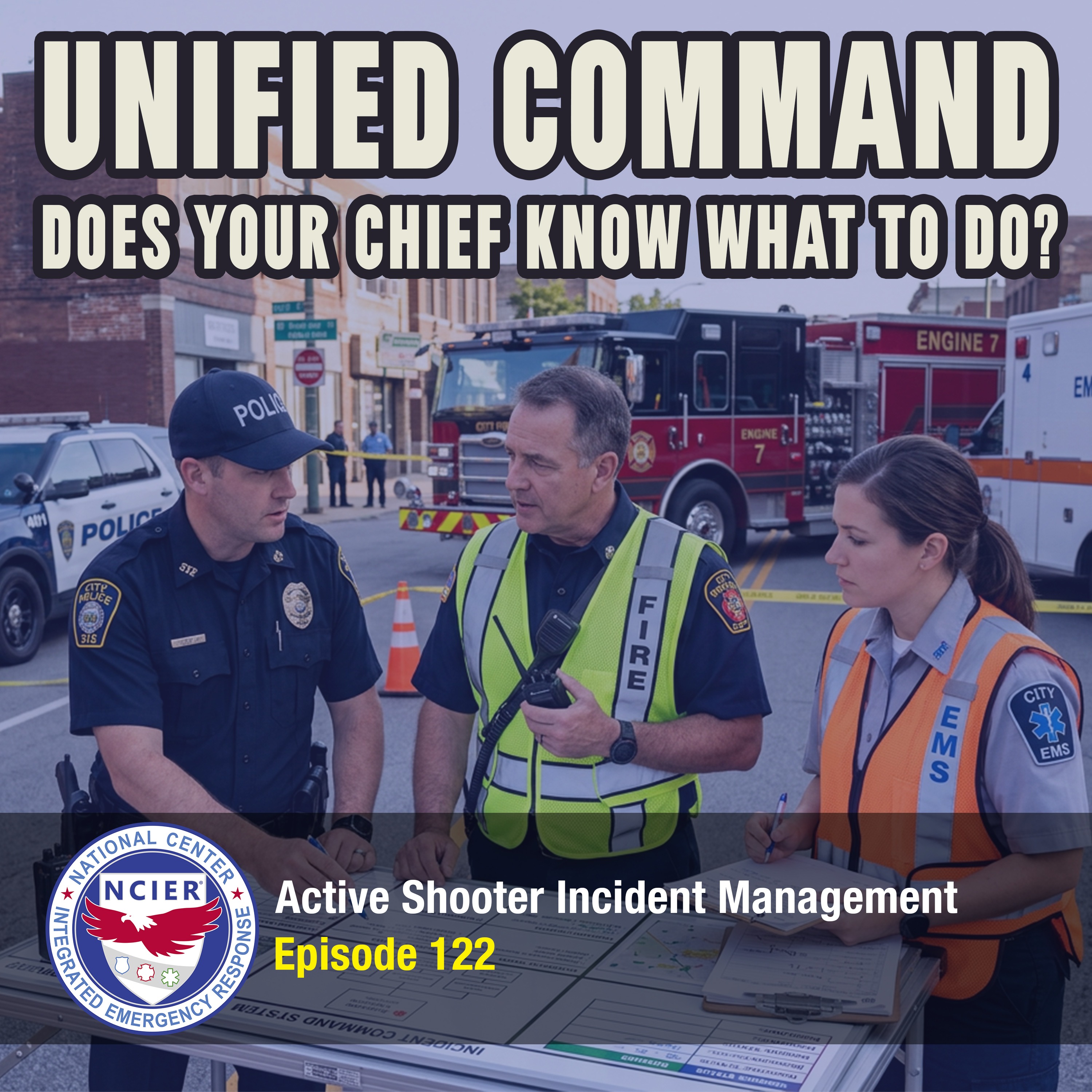
This video takes you inside a three-day, simulation-based active shooter training where police, fire, EMS, and dispatch all train together instead of in silos. Using a high-fidelity virtual environment, first responders run full-scale scenarios from the first 911 call through incident command, patient movement, hospital coordination, and political leadership communication.
Because the incidents are simulated, agencies get realistic, stress-inducing reps without pulling trucks out of service or firing live weapons. Participants describe it as unlike any training they’ve seen: it covers every aspect of a mass casualty event, forces leaders to think and communicate under pressure, and is already changing how they plan to train back home. The goal is not just to “make it work” in a crisis, but to make it work right by training together ahead of time so chaos doesn’t cost lives.
Transcript
Units responding to the courthouse. We're getting multiple 911 calls. Hospital active shooter. We have traditionally trained in silos. Police Department does their thing. Heart Department does their thing. EMS Medical does their thing. This kind of training, this integrated training, allows us all to come together and get on the same page before a tragic event happens, not after one happens. I've been in for a lot of years and a lot of active shooter training. I've never seen anything like this. fire, EMS, and dispatch operators all working together, all training for the unimaginable. It's putting them on scenes and putting them in scenarios. You know, if you do active shooter training, you may go in a building and learn to clear a building and go get the bad guy and that kind of thing. That's one aspect of this. This training covers everything. It's covering from having to get an ambulance on scene to 911 to, you know, what is instant command doing? It's got every aspect of a mass casualty or active shooter scenario. covered and that's what's really good about this. I've never seen anything like that. Any other training I've been involved in this type of virtual training is now going on in major cities across the US. The training you're seeing here took place in Atlanta. First responders got hands on experience without ever having to take equipment out of service. We start at the ground level. Let's just get you know the first officer on the scene. First couple officers and we build all the way up to get in the fire and the EMS there and get patients out but also build the command So because the mayor, the city manager, the city council, the county judge will be involved at some level or another. So we practice that communication. I've got a full staff. You want me to send any of my personnel to these hospitals so that they can? Yeah, that would be great if we could have a couple there, coordinate with medical hospitals we're going to. Let's get some people there. Let's hit this on social media, Facebook, Twitter, everything we got also. Just a quick read back on that. And then I assume the mayor and them are going to be coming down here. They're having to think through it and it's stressful and a little chaotic, which a scene like that is going to be. So without actually putting them out there with live guns or fire trucks or, you know, tourniquets and that kind of thing, it's putting them in a scenario-based environment that's going to get them as close to the real deal as you possibly can. When you hear Simulator, I think a lot of people think about Call of Duty and some of the games that my kids play or played. And they come with that perspective, but then all of a sudden they realize it's a trained tool. We're getting reports of two different shooters, a training tool for first responders, which allows them to think in a situation that is as real as you can get. Without an actual mass shooting, the more you train, the faster the response since it becomes second nature. We're already talking about how we're going to train from now on based on what we've been learning in this three day class, and so it's going to help change our training. help us update some things that maybe we need to update on our end, help us to train better for incident command, response to scenes, things like that. It's going to improve us all the way around. The good news about emergency responders, we figure out a way, no matter how bad it is, we always figure out a way to make it work. But that we don't want to make it work. We want to make it work perfect. And we have to train together ahead of time so we don't have that chaos. And we've seen some events across the nation where they weren't as prepared as they could have been at the time. And unfortunately, lives were lost because of that. We don't want that to happen.